Dogs Care

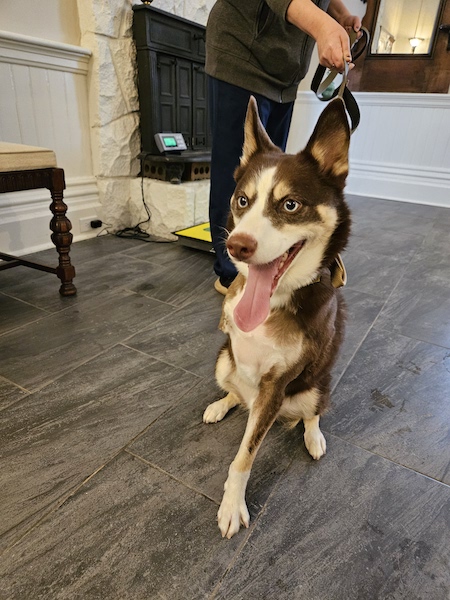
Bentley now loves his leash

Bentley is a happy active one year old husky who was running off leash when he was hit by a car. His owners rushed him into our hospital where we immediately started emergency treatment for shock. Fortunately, his shock was only moderate and he recovered well from that.  However, his right front leg was seriously damaged with skin abrasions and several bones in his carpus [wrist] were fractured. The biggest problem was that the abrasion in the skin went all the way through into the joint with the fractures. We treated him aggressively with antibiotics, topical honey, and sterile bandages, along with anti-pain medication. Topical honey is a treatment used in the ancient Greek and Roman world that has recently become popular again.  Scientific studies have shown that it is a very effective aid along with antibiotics, to treat skin wounds and abrasions.  Wounds that go through the skin all the way to joints and bones are the most difficult to treat.  We were concerned right from the beginning that conservative treatment alone was not likely to cure his leg, and that more aggressive treatments would probably be required.

After a week of conservative wound bandage care, it was clear that this infection was not going to go away. Fortunately, dogs have 4 legs and can get along just fine on only 3 legs. For a human, a leg amputation means a life altering, devastating change.  For a dog, it means only a few days in hospital, followed by a normal happy dog life. After several discussions with his owner, leg amputation surgery is what we decided would be best for Bentley. The surgery went very well and he recovered quickly, never missing a meal. He now romps around home as well as he did before his accident.  The biggest change is that it is unlikely that he will be allowed to run off leash again for a long time.

Do we train our puppy or does the puppy train us?

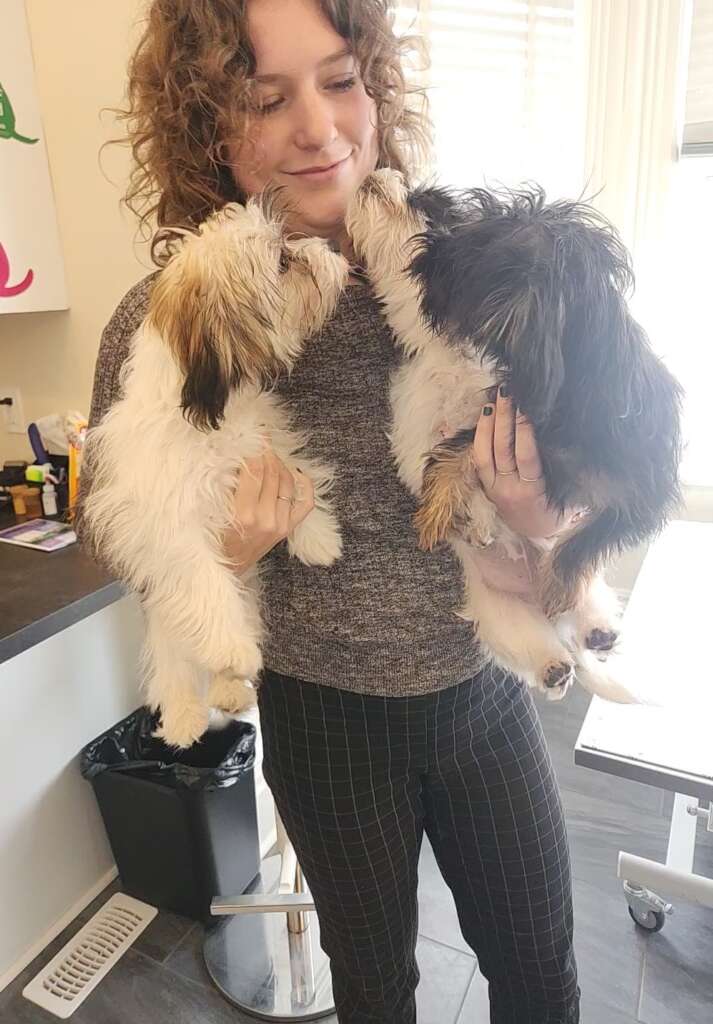
When people adopt a new puppy, teaching her to do her business outside and not in the home is a big priority. And we call it “Puppy Training” but it should really be called “Owner Training” because a new owner has so much to learn. Here is a step by step guide that may make this process easier.

First of all, you need to get a crate for your new pup and it should not be too large.  The puppy should be in it when you are not around, so when you are sleeping, or when you go out. She will be reluctant to soil her crate/bedroom, especially if it is adequately small. This is the first step of teaching her to control bladder and bowels.

The second step, starting from first thing in the morning until the last minute before bedtime, is for you to take her out on a leash, every hour. And you must wait outside with her until she  ‘goes’, so you can praise her profusely.  This is time-consuming and quite boring. You have to watch her like a hawk because her time peeing at this stage may only take 3 seconds.  If you are checking your phone and miss that important 3 second event, you will have missed a chance to praise her, and you will be stuck outside for much longer. Not only is this stage time consuming and boring, but it also can be quite embarrassing when your neighbours hear your effusive praise.  But this is a crucial part of puppy training. She has no clue that going inside is a no-no and going outside is the right way to do it.  The only way she will figure it out is through praise from you. And for some puppies, you may have to use treats as well.  Puppies want to please their owners, so she will slowly learn that it makes you really happy when she does something outside.

The next part is really owner training.  You must become very astute at reading her subtle signals that she may have to go.  Maybe she looks at the door, maybe she sniffs the floor, maybe she starts to turn in a circle. You will become an expert in watching for those special signs so you can swoop her outside to prevent an accident. If you are having accidents in the house frequently, it means you are not watching her cues closely enough and you are not taking her outside often enough.  Often owners must keep a leash on their puppy at this stage to keep her close to them all the time in the home.

What to do about mistakes?  You should not punish her when you come across an accident.  If you catch her in the act, pick her up immediately and take her outside.  But no punishment.  Then clean the spot thoroughly where she went with a good quality cleaner/deodorizer. You do not want her sniffing there in a few days and thinking this is a good spot to go because she can smell she went there before.

If you adopt an adult dog who is not well house trained, all these steps can be used to teach her to go outside.  With lots of patience, love, praise, and more patience, every puppy can be trained to go outside and not in your home.

Arthritis in Dogs

What is arthritis in dogs?

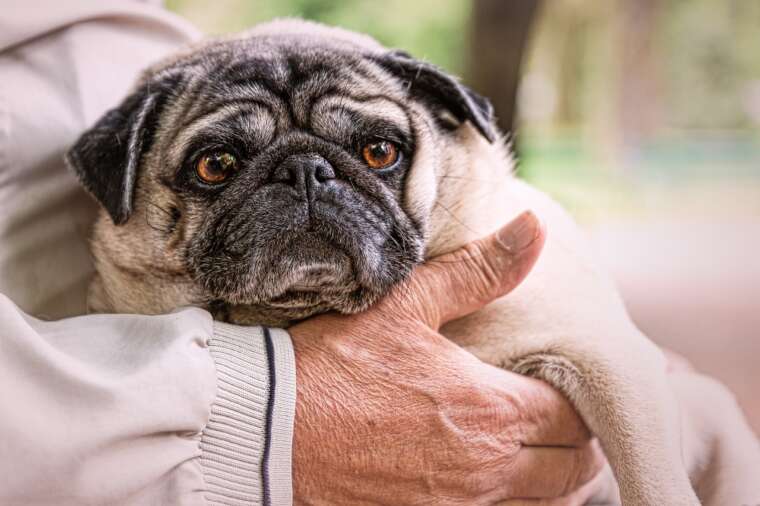
Arthritis is a medical term that means inflammation of the joints. There are several types, but the most common one is called osteoarthritis. Osteoarthritis doesn’t just affect people, it shows up in our beloved dogs too! Dogs can be affected by arthritis in any joint, but the most common areas affected are knees, hips, elbows, and the back. You might notice that your dog is reluctant to stand up, or she may run slower than before. She may not enjoy the active games that she used to. She might not be able to jump in the car like she used to. If the arthritis in your dog is severe enough, your pet may develop a limp. If you notice any of these signs in your dog, make an appointment on our contact page or give us a call.

How is arthritis in dogs diagnosed?

First, the professional team at Thorndale Animal Hospital will start with an assessment of the sore area. Radiographs of the affected areas may be taken, because radiographs are important to confirm the diagnosis. They also provide a snapshot of your pets current condition, so improvements or changes can be assessed. There is no cure for arthritis in dogs, but there are many ways your expert vet can help slow down, or even improve your pets arthritis.  Some changes that we advise to try are nutrition changes, supplements, lifestyle changes, and certain medications.

What is the treatment for arthritis?

A combination approach is best, this is where different types of treatments work together to help ease discomfort.

Some medications are used to ease arthritis symptoms in dogs. Joint protectants like Cartophen help repair damaged cartilage in the join. This type of medicine might be administered as an injection once a week, for 4 weeks. A maintenance injection every 1 to 2 months is typical.

Librela is another injectable medication that is given once a month. It is a monoclonal antibody, which means it helps by interrupting the pain signals in the joints’ nerves. We cannot turn back time, but all these treatments can make her much more comfortable.

Anti-inflammatory medications like Metacam work similar to Advil, and can be given daily in a tasty liquid form.

Diet for dogs with arthritis:

Here at Thorndale Animal Hospital, we recommend a diet called Joint Diet (JD). It contains good amounts of omega 3 fatty acids, and other antioxidants. These help to reduce pain and inflammation. Joint Diet also aids in maintaining a healthy weight. Although it is not always easy to do, one of the most important ways to help your dogs arthritis is to reduce your furry companion’s weight. A lighter dog puts less pressure on their joints.

If your dog won’t tolerate JD, then we recommend omega 3 supplements.

Please feel free to come in and get a nutritional consultation with one of our technicians, Ashley or Jessica.

Exercise for dogs with arthritis:

Exercise is important! Except, it should be gentle and limited for a dog with arthritis. We recommend 2 or 3 walks a day for 10 – 20 minutes max.  It is important to keep the joints moving, but too much exercise can cause pain to flare.

How to try to prevent arthritis?

Prevention is the best medicine! This can start when you first get your puppy. Excessive exercise can damage a puppies young growing cartilage. Wait until they are fully grown at about 1 year of age before they get large amounts of exercise.  Once they are year of age, weight management is the next most important step. Our vets can determine the optimum weight of your pet on their annual checkup. An ounce of prevention is worth a pound of cure! Maintaining a healthy weight as your dog ages is important. The more years the joints are exposed to the extra weight, the higher the chance your dog may experience arthritis.

 In summary, to prevent arthritis:

When your dog is young or a puppy, provide moderate (but not too much) exercise and plenty of food.

In adult and older dogs, provide lots of exercise and a moderate amount of food.

Relieve Your Dog’s Ear Discomfort: Expert Vet Care & Allergy Solutions for Ear Infections

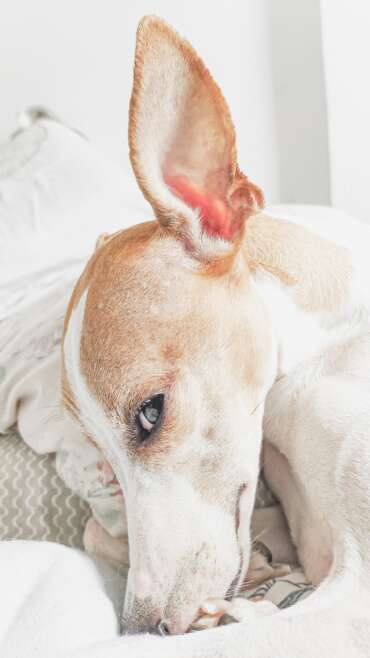
Dog ear infections are a very common plight of pet owners. Most of the time, the underlying cause is allergy. When we human have allergies, we get sniffly and sneezy with runny eyes, but in dogs, allergies can show up first as itchy ears. This can range from firstly a mildly itchy ear with a little discharge, after that can get severely red and inflamed ears with lots of wax and debris.  Bacteria and yeast can increase in the ear and make the ear infection worse. Infected ears are very painful and unpleasant for your dog which means they need to be treated right away.

The first step is for us to gently check the ear and clean it out. At this time, Dr. Kathleen will check to ensure there are no other problems such as ear mites, polyps, or tumours. If the ear infection looks severe or complicated, we will recommend doing cytology. This is where a swab is taken from the ear debris and examined under the microscope to look for yeast or bacteria.

The next step is to start treatment with  carefully chosen medication to go into the ear. We may also send you home with ear cleaner. Cleaning the ear is very important because it lessens the amount of debris and increases the effectiveness of the medication. For dogs that tend to have ear problems it is a good idea to clean their ears after swimming. For some dogs, routine ear cleaning once or twice a week is an excellent way to prevent recurrences of ear infections.

Is your dog scratching his ear?

The final step is to try and find out what your dog is allergic to. Sometimes it can be something in their food. The most common food allergies are proteins. Frequent/severe ear infections may signal a food allergy. We recommend trying special hypoallergenic diets.  We have several in stock. Dr Kathleen, or our technicians, can help you choose one. Allergies usually at the same times of year can be pollen, plants, or mold spores. If you use ear cleaner regularly at this time of year can help reduce the chance of an ear infection developing. If it is year-round, it could be an allergic reaction to allergens in the house such as dust, house mites or indoor molds.

Dog ear infections are common, and above all unpleasant.  We will help you make your dog more comfortable by treating and preventing them together.

Contact us today to get your animal companion some relief!

Logo-inv

STAY IN TOUCH

Subscribe to our newsletters!

Thorndale Animal Hospital © 2026. All rights reserved.Terms of Use | Privacy Policy | Sitemap